Jul 22, 2026
Eurex
Building global markets
15 years in Asia: From access to impact (Part 2)
As Eurex celebrates 15 years in Singapore, the way Asian investors access and manage global markets has evolved significantly. Tools once used mainly for directional trading are now central to portfolio construction, risk management, and capital allocation across the region.
In this article, Kris Hopkins, Deputy Head of APAC Sales at Eurex, discusses how APAC investors' use of European benchmarks and fixed-income products has evolved over the past decade and a half. He explores the growing importance of capital efficiency, the rise of multi-asset investing, and how exchanges are adapting to meet the needs of increasingly sophisticated investors managing global portfolios across time zones.
Kris, how have APAC investors’ use of European benchmarks evolved over the past 15 years?
Fifteen years ago, European benchmarks were primarily used as directional trading tools, largely through futures, to gain macro exposure or implement tactical hedging strategies. Their use tended to be episodic and driven by broader market events rather than being embedded in portfolio construction.
Today, the picture is very different. European indices such as the EURO STOXX 50® and STOXX® Europe 600 have become core components of many institutional portfolios. Investors are using them not only for outright exposure but also for relative value strategies, sector rotation, portfolio overlays, and volatility management.
At the same time, these benchmarks also play a very practical role in bridging time zones. Outside of core trading hours, these products effectively act as the most reliable access point to European risk. That connection has become more important as portfolios have globalized. For APAC investors, European index derivatives now serve as an access tool that allows for continuous risk management across regions.
How are APAC investors using Eurex’s fixed income ecosystem differently today compared to a decade ago?
The market has become much more strategy-driven. Ten years ago, activity was largely concentrated in Bund futures, often linked to macro views on ECB policy or global duration.
Today, we’re seeing increased engagement across the curve – Bobl, Schatz, Buxl, as well as more active basis trading between futures and cash or swaps. The integration with repo and collateral considerations is also much more pronounced. Investors are thinking about funding, balance sheet efficiency, and cross-market relative value, not just duration.
Another notable development has been the growing interest in Italian government bond futures. Increased liquidity and improving market fundamentals have encouraged more participation from Asia-based investors, particularly institutions seeking opportunities across European fixed-income markets.
We are also seeing growing participation from non-bank investors, including asset managers, macro hedge funds, and relative value strategies. European rates markets are increasingly being used to express policy divergence views, particularly relative to the U.S., while investors are also becoming more focused on financing, collateral and balance-sheet efficiency.
Looking ahead, we see the strongest growth opportunities in cross-market and relative value trades, such as U.S. Treasury versus Bund strategies and curve spread positions, the integration of financing and collateral optimization workflows, and the continued expansion of buy-side access as trading and clearing models evolve. Ultimately, the strongest growth opportunities will be found in how global fixed-income portfolios are constructed, financed, and managed.
How is client demand shaping the development of index-based derivatives?
One trend we are seeing is the growing demand for short-dated options. These products allow investors to manage specific event risks, such as economic data releases or central bank announcements, with greater precision.
Capital efficiency has also become a key consideration. Investors are increasingly focused on margin offsets, portfolio margining, and cross-asset netting. In a capital-constrained environment, the ability to deploy capital more efficiently can have a significant impact on overall portfolio performance.
Finally, there is growing interest in transparent and standardized listed products. Where liquidity is sufficient, centrally cleared derivatives are becoming an increasingly attractive alternative to OTC instruments, offering operational efficiencies alongside enhanced risk management.
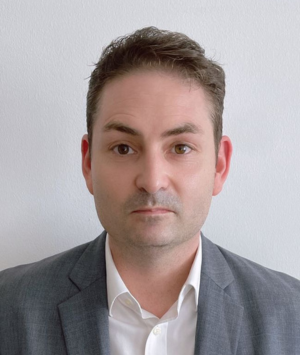
Product development has become much more demand-led than supply-led. Client demand today is centered on three themes: precision, flexibility, and efficiency.
Kris Hopkins
Deputy Head of APAC Sales at Eurex
Investors are increasingly thinking in terms of portfolios rather than individual asset classes. How is Eurex adapting to support this shift?
Portfolio construction today is increasingly multi-asset by default. Investors are looking at exposures holistically rather than managing equities, fixed income, and volatility separately.
As a result, the industry is moving towards integrated ecosystems rather than standalone products. For Eurex, that means focusing on areas such as cross-margining, capital efficiency, and workflow integration across asset classes.
The ability to manage equity, fixed income, and volatility exposures within a consistent framework is becoming increasingly important. When investors can deploy strategies more efficiently from both a capital and operational perspective, it changes how they approach portfolio construction.
For APAC investors managing global portfolios across multiple markets and time zones, these efficiencies are particularly valuable.
Looking ahead, where do you see the next phase of growth coming from?
While individual asset classes will continue to grow, the larger opportunity lies in integration.
Investors increasingly want infrastructure that allows them to manage portfolios seamlessly across regions, time zones, and asset classes. They are looking for deeper liquidity, greater capital efficiency, and more effective ways to connect different sources of risk within a single framework.
The next phase of growth will come from bringing together equities, fixed income, and volatility products into a coherent ecosystem where the combined value is greater than the sum of the individual parts.
For APAC investors in particular, that is highly relevant. They are managing global portfolios from a different time zone, often under tighter capital constraints and with a strong focus on execution efficiency. The firms that can provide integrated solutions to those challenges will be best positioned for the future.
